

What’s the Space Weather Like on Proxima Centauri?
Stars (including our Sun) are active, periodically releasing bursts of high energy radiation called flares. These flares can destroy molecules in the atmospheres of nearby exoplanets and potentially even erode those atmospheres entirely. In order to understand whether any of our nearest neighbors are in fact habitable, we need to determine how frequent and how powerful these flares are. I will present recent discoveries from multi-wavelength observing campaigns, including the largest flare ever detected from Proxima Centauri, the closest star to us that also hosts a potentially habitable planet. These new results are changing how we think about space weather and the potential for life on other planet— Come learn how to be an astronomical meteorologist!
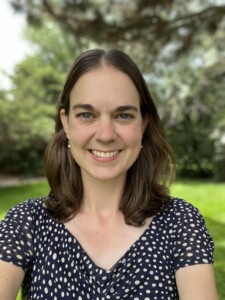
Dr. Meredith MacGregor
Dr. MacGregor will be presenting at George Mason Univeristy. Join your NOVAC colleagues at GMU or online at 4:00 pm to socialize before the meeting begins.
Meet at George Mason University:
Meet at George Masons University, Exploratory Hall, Room 3301. Check the GMU web site for nearby parking options. Some lots and garages do charge for parking. GMU Maps and Directions link: https://info.gmu.edu/campus-maps-and-directions/
Join virtually using Google Meet:
Video call link: meet.google.com/cbf-jusw-dsm
Or dial: (US) +1 252-344-1407 PIN: 937 923 741#
Sunday September 14, 2025
4:00 pm Join colleagues at GMU for socializing
4:00 pm Join the online meeting for participant open discussion
4:30 pm NOVAC news, announcements and events
5:00-6:00 pm Dr. Fishbach’s presentatation
Talk Title: What’s the Space Weather Like on Proxima Centauri?
Biography:
Dr. Meredith MacGregor is an assistant professor in the Department of Physics and Astronomy at Johns Hopkins University. Her research group uses multi-wavelength astronomical observations to explore the formation and habitability of planetary systems. Her work has been widely covered in the popular press including Scientific American, Science News, and National Geographic. Previously, she was faculty in the Department of Astrophysical and Planetary Sciences (APS) at the University of Colorado Boulder until 2023, and an NSF Astronomy and Astrophysics Postdoctoral Fellow at the Carnegie Institution for Science, Earth & Planets Laboratory in Washington, D.C. after completing her Ph.D. in Astrophysics at Harvard University in 2017.